Article
Why Multilingual Signs Won't Solve World Cup Wayfinding
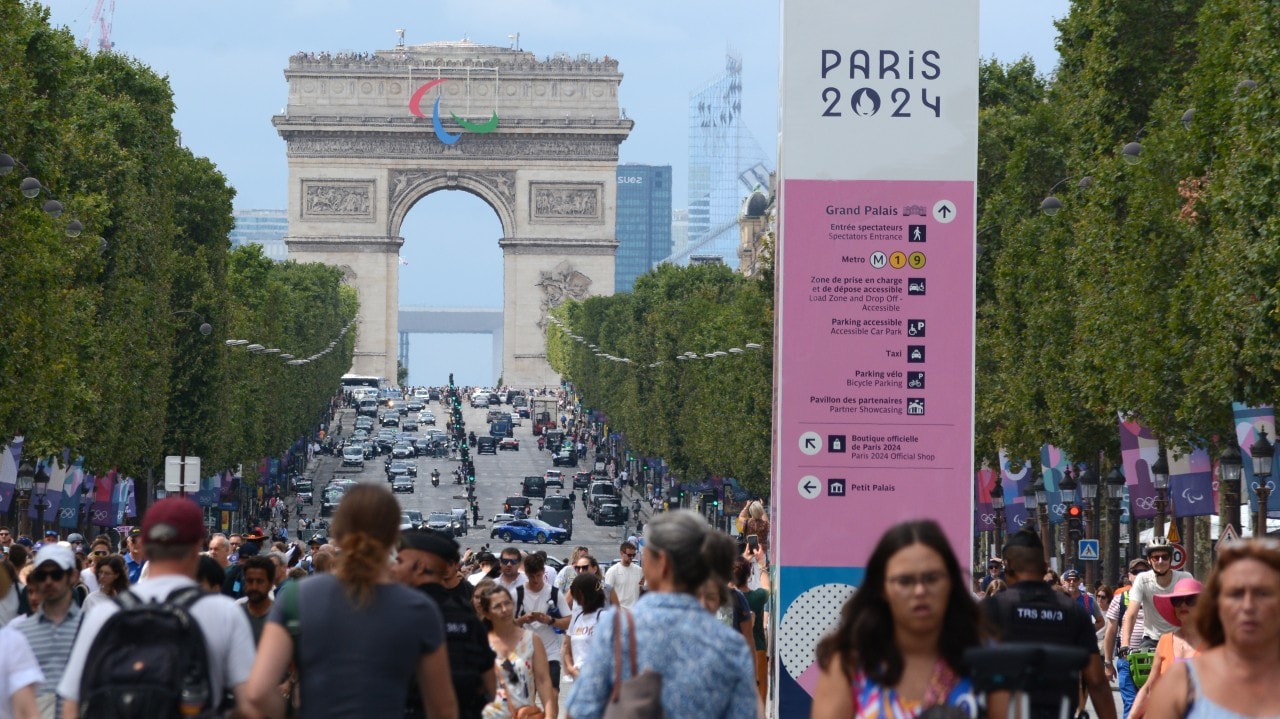
As North America prepares to welcome the world for the FIFA World Cup, many cities, venues, and event organizers are asking the same question: How do we design wayfinding for an international audience? The common assumption is that more languages equal better navigation. Clients often request signage translated into the languages of participating nations, believing it demonstrates inclusivity while helping visitors find their way. While well intentioned, decades of experience from the world's largest events suggest a different approach. The Olympics, FIFA World Cup, Super Bowl, and Disney Parks have all moved away from relying primarily on multilingual signage and instead focus on universal communication systems built around pictograms, clear hierarchy, and audience segmentation.
The reason is simple. Navigation along the last mile and within event venues happens under pressure. Visitors are moving through crowded environments, often distracted, excited, unfamiliar with their surroundings, and sometimes unable to read the local language. In these situations, people do not stop to translate lines of text. They look for visual cues. The Olympic Games provide one of the strongest examples. During my research for the four global case studies featured in Chapter 20 of The Science of Wayfinding, I interviewed Amber Walbeck, Planning and Development Manager for the International Olympic Committee. She explained that Olympic wayfinding typically prioritizes the host country's language, with English added for international stakeholders and French included where required by Olympic protocol. Yet the real power of the system comes from universally understood pictograms and carefully planned circulation routes tailored to different user groups such as spectators, athletes, media, workforce, and hospitality guests. The goal is not to translate every message. The goal is to create an environment that people can intuitively understand regardless of language.
This same philosophy can be seen at FIFA World Cup events, the Super Bowl, and Disney Parks, where wayfinding systems prioritize audience segmentation, intuitive destination naming, and universally recognized pictograms over extensive multilingual translation. Rather than creating signs with two, or three languages, these organizations focus on communicating the right information to the right audience at the right moment. Transportation icons, restroom symbols, parking identifiers, gate numbering systems, and destination hierarchies become a universal language understood by visitors from around the globe. Effective wayfinding is not about adding more words. It is about reducing cognitive load and creating confidence. As we design citywide wayfinding systems in preparation for hosting the FIFA World Cup, one lesson stands out from decades of global events: the most effective international wayfinding systems are not multilingual. They are universally understandable.